NATURAL COLOUR & FIBRE. GROWN HERE.
HOME
DYEHOUSE
SHOP
ABOUT
FOUNDERS
PAPAHOA NAME
OUR VALUE PILLARS
SUPPORT
CONTACT
WORKSHOPS
RESOURCES
GLOSSARY
NATURAL DYE BASICS
0
All Categories - Papahoa Fibreworks Ltd
All
Workshops
Dye extracts
Linen
Seed
Mordants / auxiliaries
Locally grown dyes
e-Books
Custom dye services
Buy now
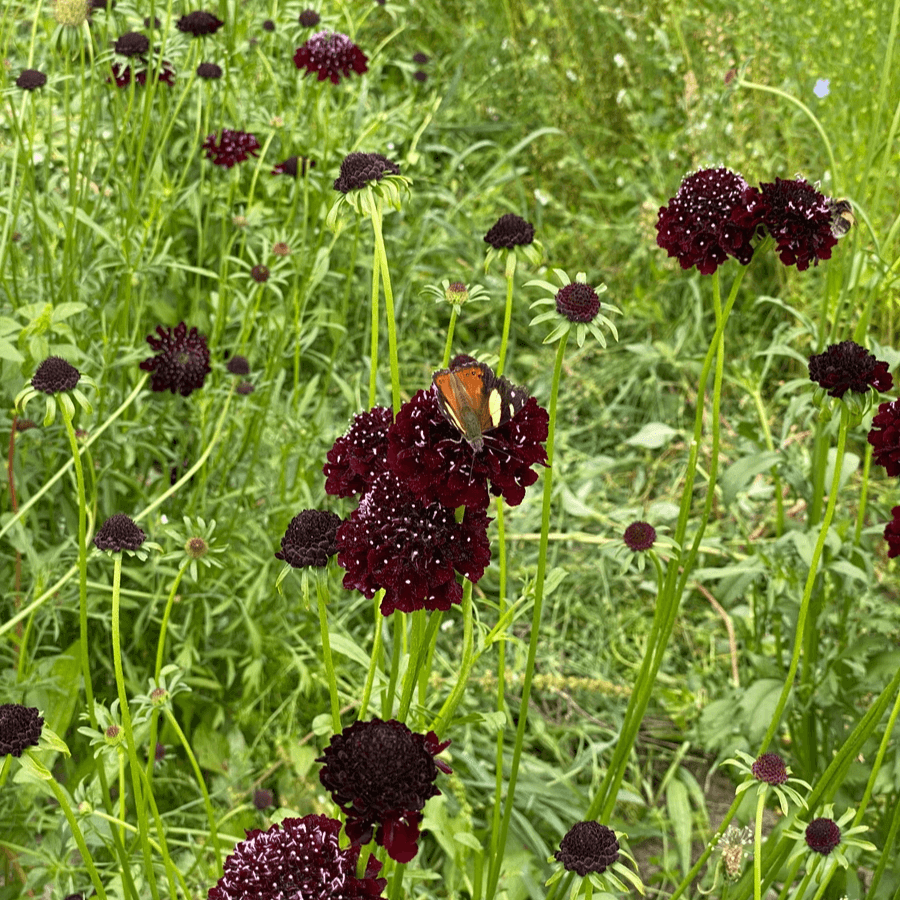
Scabiosa Black Knight - 50 seeds
Grown for the striking petals, scabiosa black knight imparts some fantastic colour when eco-printing.<br><br>Certified organic seeds grown, harvested &amp; dried in Lincoln, Canterbury.<br><br>50 Seeds
$8.00
Buy now
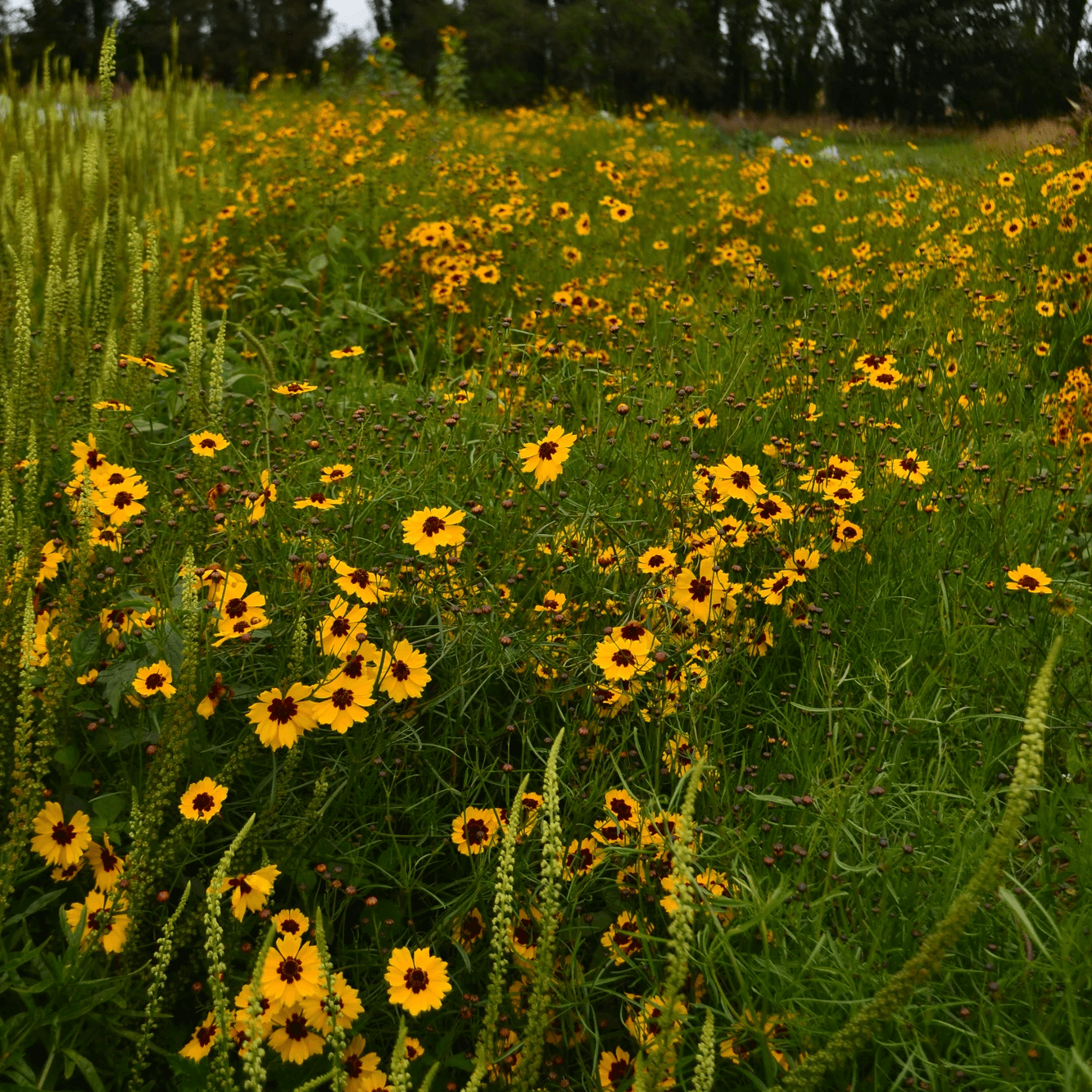
Coreopsis seeds
Certified organic seeds, grown and harvested at the BHU Organic farm in Lincoln, 2025<br><br>50 seeds
$8.00
Buy now
Canterbury Linen Fibre – Long line 50g
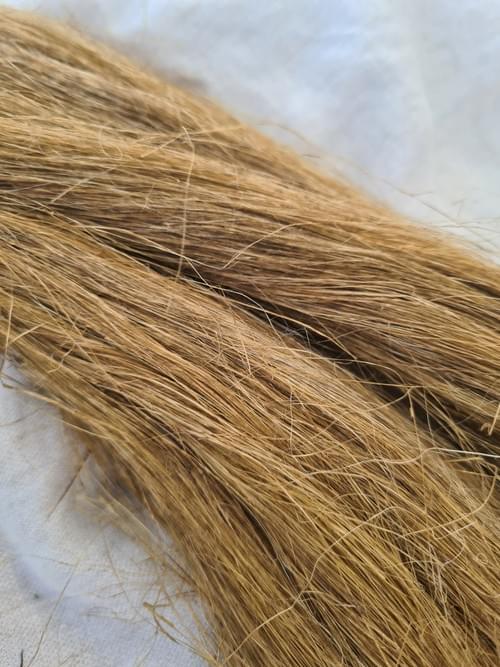
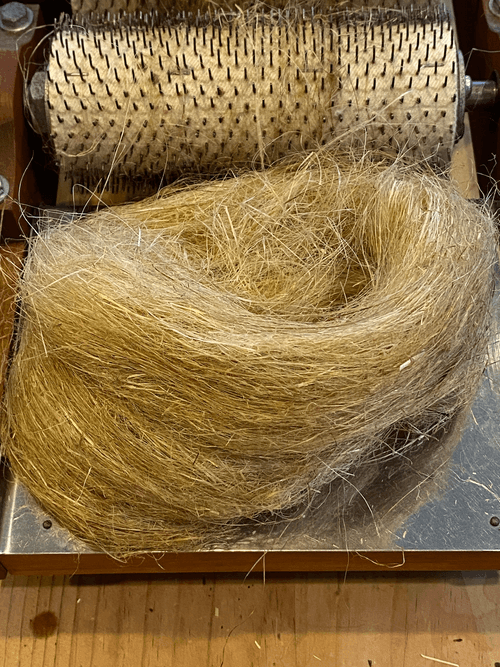
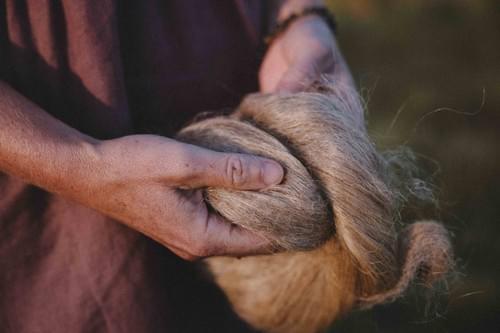
Grown on our organic farm in Tai Tapu, hand pulled, dew retted, manually broken, scutched & hand combed. <br><br>Long line is the long, aligned bast fibres that run the length of the linen flax stalk. Extracting the fibre is a slow process that takes a lot of hands and a lot of energy to get here and due to the hand processed nature, every strick of fibre has it's own unique characteristics. <br><br>Stock is limited and processing is ongoing, so if this lot is sold out, you're welcome to join the backorder list via our pre-order option and we'll be in touch when the next batch is ready to ship to you.<br><br>Available in 50g stricks<br><br>Every purchase goes toward our hi-lo spinning machine. More information coming soon via our Patreon: https://www.patreon.com/cw/papahoa_fibreworks<br><br>Good for: hand-spinning, linen yarns, weaving & experimenting.
$70.00
Buy now
Introduction to Natural Dye: A Beginner's Natural Colour Workshop (24/1/27)
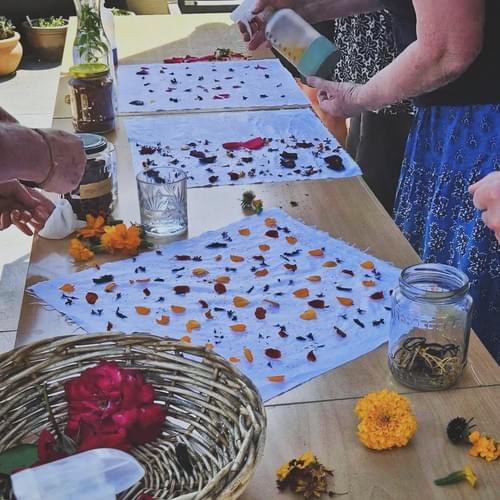
Connect with what's growing around you, and learn to turn it into beautiful, <br>one-of-a-kind fabric.<br><br>WHEN: Sunday 24th January, 1pm - 4pm - Light refreshements included<br>WHERE: Papahoa Fibreworks HQ, 78 Buchan St, Chch.<br><br>We'll start with the groundwork every natural dyer needs: a brief, practical run-through of fabric preparation, so the colour you create actually lasts. Then we'll get into the dyestuffs, discussing the surprising range of colour hiding in plants, plant waste, and garden pickings, plus how simple modifications can stretch that into a much broader palette.<br><br>You'll use these plants to build abstract patterns on fabric through bundle dyeing. First, you'll practise the technique on pre-treated cotton squares, before taking what you've learned to create your own one-of-a-kind silk bandana to keep or gift.<br><br>We'll cover how to care for your finished fabric so the colour keeps its life, and there's space to ask questions throughout — this is a beginner's session, and no question is too basic. You'll leave with a take-home booklet compiling everything covered — techniques, references, and notes — so you can keep practising natural dye at home long after the workshop ends.
$148.00
Buy now
Make It, Don't Buy It — A Botanical Colour Gifting Workshop (6/12/26)
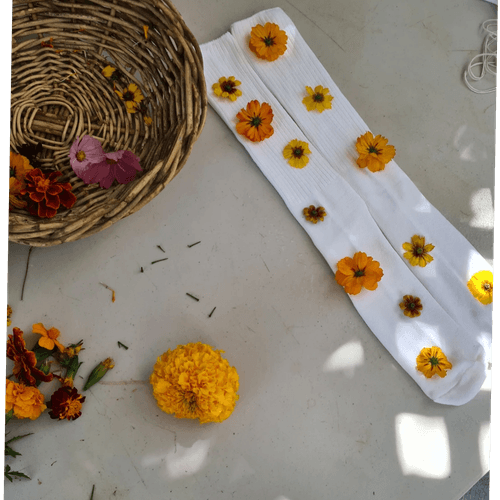
A creative, hands-on session making things worth keeping — the antidote to another trip to the mall.<br><br>WHEN: Sunday the 6th December, 1:00pm- 5:00pm. +Iight refreshments<br>WHERE: Papahoa Fibreworks HQ, 78 Buchan St, Sydenham, Chch<br><br>Ditch the big-box gift this year - come lean into slow, thoughtful making. <br>Learn techniques you'll use again and again, and leave with gifts that are actually meaningful: made by hand, made to last, and when their life is done, they can return to the soil rather than a landfill.<br><br>We'll start with bundle dyeing — working plants into cotton fabric swatches, a skill you can take home and keep using. We'll turn these into Furoshiki, welcoming Ayumi from FabLab to demonstrate some of our favourite furoshiki techniques.<br><br>Then we'll turn to socks: injecting plant-based colour into a pair of cotton or wool socks for yourself or someone you love, using fresh dye plants straight from our farm. A handful of different techniques, one very unstereotypical twist on the "dull" holiday gift. In between, there's tea, snacks, and conversation — about the plants that made your colours, and the techniques that got them there. Join us in making something worth keeping.<br>
$175.00
Buy now
Exploring Indigo: From field to vat (30/1/27)
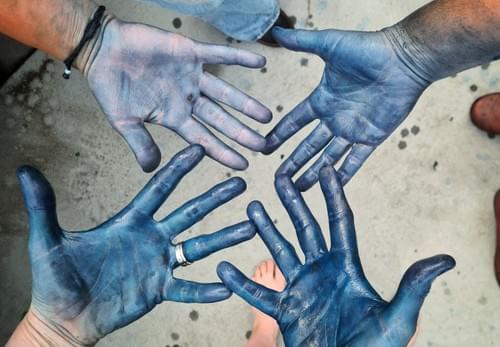
From field to vat — everything you need to fall in love with the world's most storied blue.<br><br>WHEN: Saturday 30th January, 10:00am-4:00pm - Lunch included<br>WHERE: Start at the Halswell Farm, Quaifes Road. Finish at Papahoa HQ, Sydenham. Transport can be provided if need be.<br><br>We start at the farm, walking the indigo field itself — how it grows, what it needs, and why we chose to grow it here. You'll harvest fresh leaves yourself before heading back to the dyehouse to process fresh leaf indigo, learning the <br>chemistry behind the process as you go. You'll leave this stage with a silk scarf dyed in indigo's iconic "mermaid blue."<br><br>From there, we move into indigo vats — the different types, and the chemistry that makes each one work. You'll process multiple fabric swatches to take home for your own future projects, and you're welcome to bring a piece of clothing from home to add to the dyebath yourself.<br><br>Along the way, we'll take a deeper look at indigo's place in history — how one plant helped shape trade, colour, and culture across the world, and what makes it such a singular dyestuff even now.<br><br>A full day, field to fabric, with a scarf and a stack of swatches to show for it.
$182.00
Buy now
Painting and Printing with Plant-Based Colour (13/2/27)
Move beyond the dye pot — learn to paint, print, and resist your way to fabric that's entirely your own design.<br><br>WHEN: Saturday 13th February, 10:00am - 6:00pm. Lunch included.<br>WHERE: Papahoa Fibreworks HQ, 78 Buchan Street, Sydenham, Chch<br><br>This workshop takes you into the more painterly side of natural dye. You'll learn to make and print your own colour pastes, apply mordant pastes to create resist patterns, and paint directly onto fabric to build unique, considered designs — rather than leaving pattern to chance.<br><br>Along the way, you'll work with tannins, modifiers, and immersion baths alongside these techniques, layering methods to pull out a genuinely wide range of patterns and effects from plant-based colour alone.<br><br>By the end, you'll have a working toolkit of techniques — not just a piece of fabric, but a repertoire you can keep combining in new ways at home.
$178.00
Buy now
A Day on the Farm: Fresh Flower Dyeing Techniques (28/12/26)
Spend a day among the plants that make the colour — harvest it yourself, then put it straight to work.<br><br>WHEN: Monday 28th December, 10:00am - 4:00pm. Lunch included <br>WHERE: Start at the Halswell Farm, Quaifes Road<br><br>Join us on the farm for a full day of learning, harvesting, and hands-on experimentation with fresh dyestuffs pulled straight from the field.<br><br>You'll move through the field talking about each dye plant, what colour they produce, and the techniques that work best for them. You'll then be taken through a host of different fresh-flower techniques — tatakizome (hammered leaf and petal printing), fresh leaf indigo, bundle dyeing, and solar dyeing — building a real feel for how each plant behaves differently depending on the method. Because everything you work with comes straight from the field, no two results are ever quite the same.<br><br>You'll leave with a collection of fabric swatches across the different techniques, plus a tote bag and a silk scarf of your own to wear or gift. <br>You can even take home plant materials to DIY when you get home.<br>
$184.00
Buy now
Field to Fibre: Building a Regional Textile System (13/11/26)
Field to Fibre: Building a Regional Textile System<br><br>A two-part workshop moving from field to dyehouse — see the full arc of what Papahoa is building.<br><br>WHEN: Friday 13th November, 9:00am - 5:00pm. Lunch included.<br>WHERE: Start at the Halswell Farm, Quaifes Road. Finish at Papahoa HQ, Sydenham. Transport can be provided if need be.<br><br>We start on the farm, exploring our Hua Parakore-informed growing ethics and the Soil to Oneone philosophy that treats fibre and dye as a closed loop, not a supply chain — this is a working prototype for a regional textile system, not a demonstration plot.<br><br>From there, into the dyehouse: a live dye demonstration using material harvested on site, your own dye swatch to take home, and a look at our indigo vats (bring a garment if you'd like to dye it yourself). We'll walk through linen's journey from stalk to fibre — retting, breaking, scutching, hackling — and where hand-work still beats mechanisation.<br><br>We'll close with where it's all heading: the Hi-Lo spinning build, real demand already in the pipeline, the gaps we're still solving, and how you can be part of what comes next.
$245.00
Buy now
Gallnut Extract [quercus infectoria]
In natural dyeing, gallnut extract is prized above all as a tannin mordant for cellulose fibres such as linen, cotton, and hemp. Because alum doesn't bind readily to cellulose on its own, a tannin pre-treatment is essential — the tannin bonds to the fibre first, and alum then bonds to the tannin, creating a stable base for dyeing. On its own, gallnut imparts only a very pale, warm beige — but combined with iron, it produces soft greys through to deep charcoal and black, making it a key building block in natural in natural grey/black palettes.<br><br>Typical use rate: 5–8% WOF (weight of fibre) for mordanting; can be increased toward 15-20% for deeper iron-black effects.<br><br>Safety notes:<br>- For dye/craft use only — not intended for human or animal consumption.<br>- Wear a dust mask when handling the dry powder to avoid inhalation, and gloves are recommended to avoid staining.<br>- Low toxicity but standard studio hygiene applies — avoid ingestion, keep away from food preparation areas, and wash hands after handling.<br>- Store in a cool, dry place away from children and pets.<br><br>GOTS and Eco Dye certified, sourced responsibly from India.
$21.00 - $40.00
Buy now
Indigo Extract [indigofera tinctoria]
Indigo is one of the world's oldest and most iconic dyes, traditionally sourced from the leaves of Indigofera tinctoria or related species. Unlike most natural dyes, indigo is not a soluble dye but an insoluble pigment — indigotin — locked inside the plant. This means indigo doesn't bond to fibre the way tannin- or mordant-based dyes do. Instead, it must first be chemically reduced in a vat, converting it into a soluble, pale yellow-green form ("white indigo" or leuco-indigo) that the fibre can absorb. Once the dyed fibre is lifted from the vat and exposed to air, oxidation instantly converts the leuco-indigo back into its insoluble blue form.<br><br>Because no mordant is required, indigo can be used on protein and cellulose fibres alike, and it is compatible with a range of vat systems. Depth of colour is achieved through repeated short dips and oxidations rather than a single long soak — each dip adds a thin layer of blue.<br><br>GOTS and Eco Dye certified, sourced responsibly from India.<br>
$21.00 - $40.00
Buy now
Cutch Extract [acacia catechu]
Cutch extract comes from the heartwood of Acacia catechu, a tree native to India, Burma, Indonesia, and Peru. To produce it, the heartwood is steeped in hot water until a thick, syrupy liquid emerges, which is then dried and ground into a fine, water-soluble powder. Cutch is unique among natural dyes in being both a dyestuff and a tanning agent in one — it contains the colouring compound catechin alongside naturally occurring tannin.<br><br>Cutch produces a unique warm, earthy palette of colourfast browns — cinnamon, nutmeg, toffee, and ochre with an alum mordant, deepening to rich chocolate brown with iron, or shifting toward russet and terracotta with a touch of soda ash or calcium carbonate. It's prized for its excellent lightfastness and washfastness, among the most durable of all natural browns, and has a naturally sweet aroma in the dyebath.<br><br>Use at 15–30% WOF for a good depth of colour on cellulose fibres, up to 50% WOF for the deepest shades. Cutch doesn't exhaust easily, so a single dyebath can often be reused for several progressively lighter shades. <br><br>GOTS and Eco Dye certified, sourced responsibly from India.
$28.00 - $50.00
Buy now
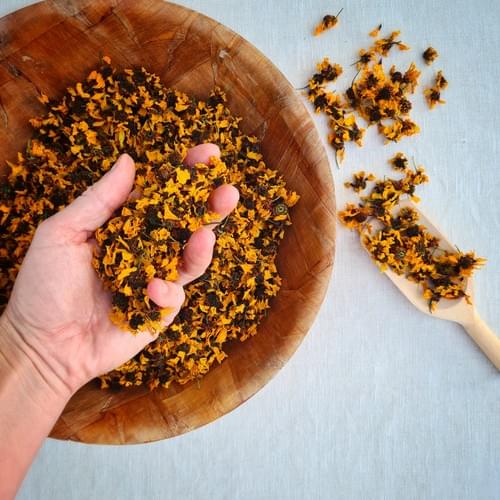
Dried coreopsis [coreopsis tinctoria] - 50g
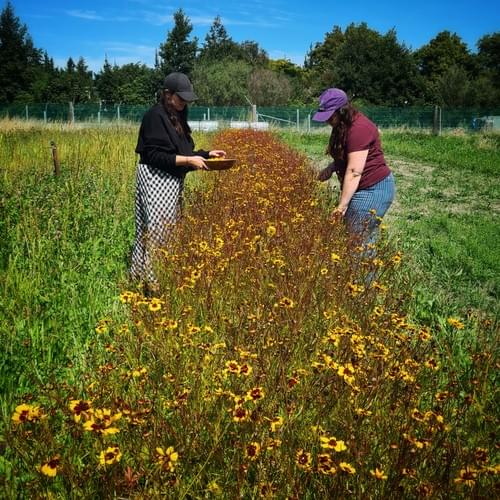
Coreopsis (Coreopsis tinctoria) can provide rich rusty oranges, depending on the mordant and dyeing method. Hand-harvested from organically managed crops keeping it natural for your dyeing needs. <br><br>Certified organic, grown at Papahoa Fibreworks Farm in Tai Tapu, Canterbury over the 2025/26 season<br><br>Whole flower heads - 50g lots <br>
$19.00
Buy now
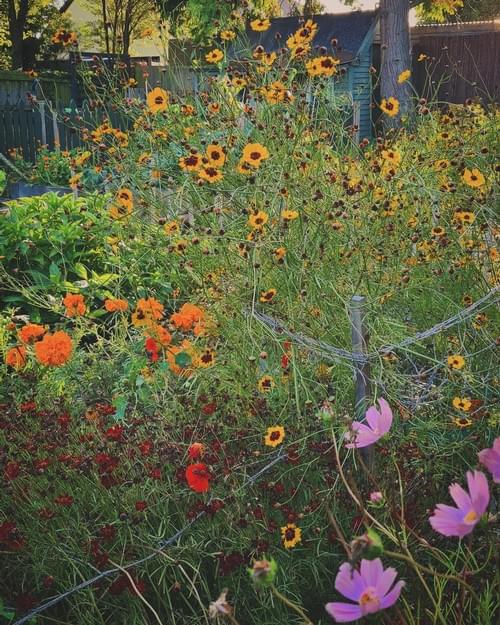
Grow your own flowering dye garden - multi seed pack
Choosing to grow your own dye plants not only allows you to infuse your home and wardrobe with homegrown natural colour at your leisure – but they are also beautiful additions to your summer garden that bring intense pops of colour, whilst also attracting bees and other pollinators.<br><br>These seeds have been harvested from the Papahoa Fibreworks fields, and each is accompanied with a brief rundown on the history, growing, care, harvest and dye opportunities with each plant.<br><br>Seeds included: Coreopsis, Black Knight Scabiosa, Sulphur Cosmos and French Marigolds<br><br>Certified organic seeds, grown and harvested by Papahoa Fibreworks in Waitaha Canterbury. Approx. 50 seeds per flower, approx. 200 seeds total.
$42.00
Buy now
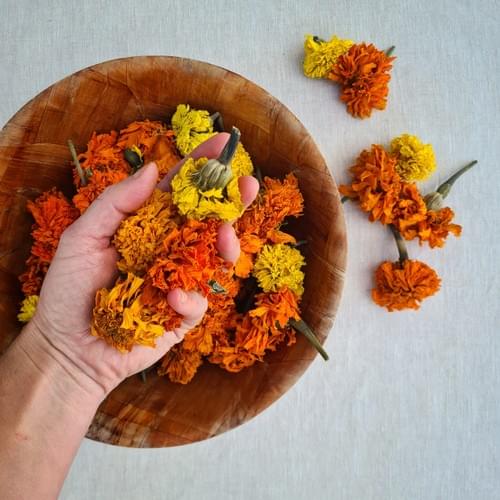
Dried aztec marigolds [tagetes erecta] - 100g
Marigold (Tagetes erecta) can provide vibrant, rich golden hues, depending on the mordant and dyeing method. Grown without chemicals or pesticides, each bloom is hand-harvested to ensure the highest quality for your dyeing needs.<br><br>Certified organic, grown at the Papahoa Fibreworks farm in Tai Tapu, Canterbury over the 2025/26 season<br><br>Whole flower heads - 100g lot
$24.00
Out of Stock
Buy now
Carded Canterbury tow roving - 50g
Tow refers to the short fibres that remain on the combs when processing our long line linen fibre. We've taken our Canterbury-grown tow and carded it into a roving, so it's ready to spin straight from the bag. The carding opens the fibres up and makes linen more approachable for spinners who are newer to working with bast fibres. If you've found long line or tow a bit challenging to draft, start here.<br><br>Please note that our Canterbury-grown fibres are all hand processed so there may be anomalies in the fibre such as left over shives. <br><br>Every purchase goes toward our hi-lo spinning machine. More information coming soon via our Patreon: https://www.patreon.com/cw/papahoa_fibreworks<br><br>Good for: beginner linen spinning, woollen-style preparation, papermaking, blending with wool or other fibres.
$52.00
Buy now
Woad Seeds
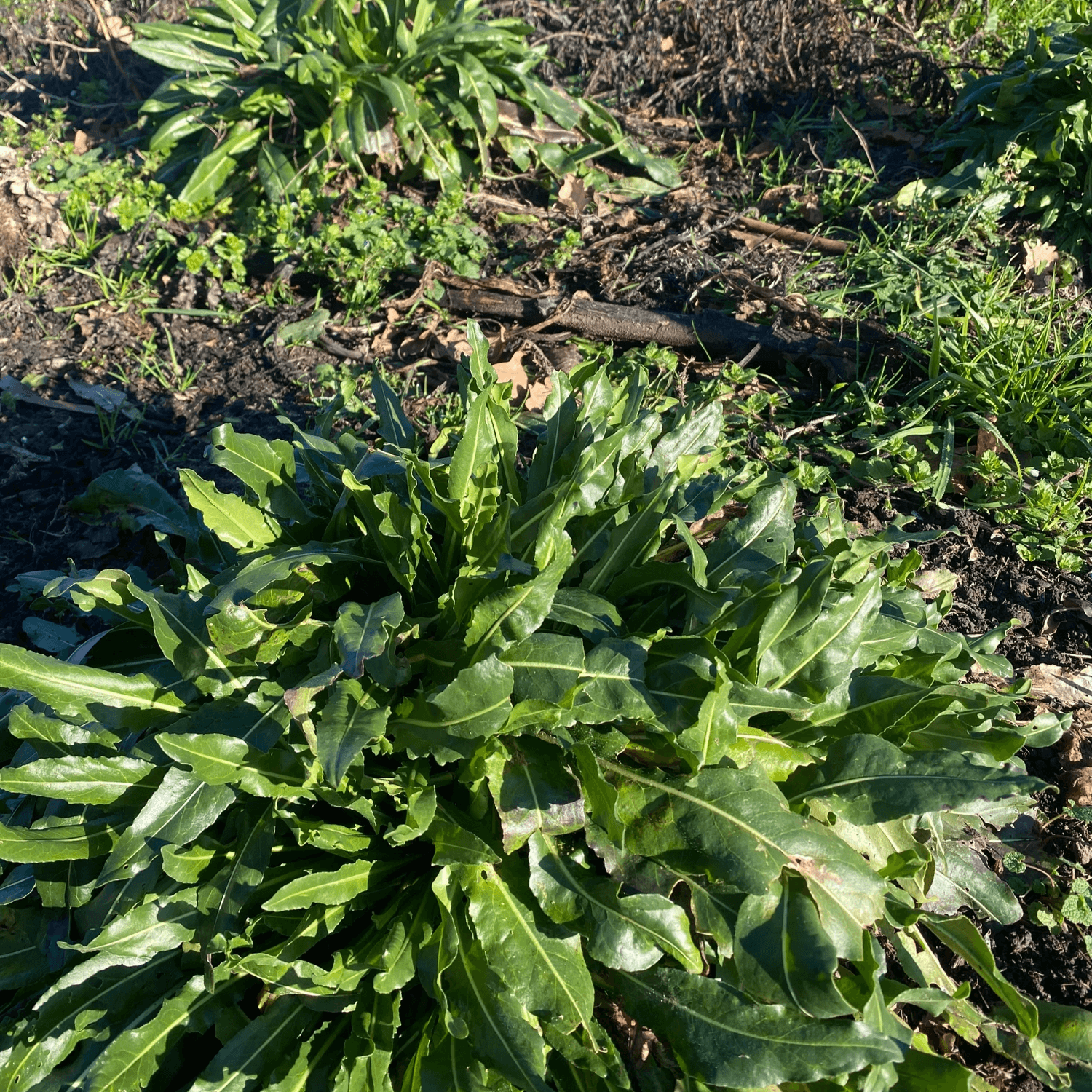
Woad is a member of the brassica family and happily grows throughout winter. Grows as a rosette, harvest the leaves as you would a cut-and-come-again lettuce, from the oldest leaves, discarding any that have browned.
$8.00
Buy now
Linen roving - Commercially processed
This fibre came to us as a gift from a New Zealand university, originally sourced through Landcare Research. We don't know its origins or how it was processed, but it has been commercially cleaned and prepared into a roving and it's a lovely fibre to work with. If you've been curious about spinning linen but haven't tried it yet, this is an excellent place to start.<br><br>With this gift, we're raising money to build a hi-lo spinning machine, a pivotal piece of equipment in our linen production line-up. More information coming soon via our Patreon: https://www.patreon.com/cw/papahoa_fibreworks<br><br>Good for: hand-spinning, sampling, weaving, experimental textile work.
$25.00 - $80.00
Buy now
Soda Ash - 500g
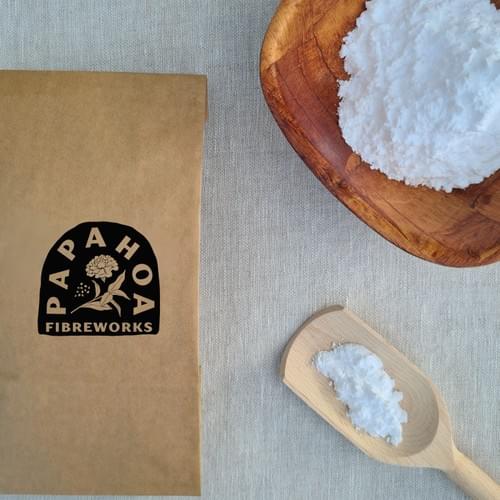
Soda ash (sodium carbonate) is an essential alkaline agent in natural dyeing used primarily to scour (clean) cellulose fibers like cotton and linen, raise the pH of dye baths for brighter colours.<br><br>It is used at 1-2% of the fiber's dry weight (WOF) to remove oils and waxes before dyeing.<br> <br>Soda Ash is considered non-toxic, but working in a ventilated area and wearing a mask and gloves is best practice whilst handling this powder. I recommend keeping any tools used for this process separate from kitchen tools. Alum acetate may be safely disposed of in a municipal water system by pouring down the drain.<br><br>This material comes in a natural biodegradable cellophane. We recommend transferring this to a glass or plastic jar for long-term storage.
$6.50
Out of Stock
Buy now
Potassium Titanium Oxalate - 100g
Potassium Titanium Oxalate is used for the mordanting of protein and cellulose fibres. The Titanium aids in producing bright oranges with some tannins.<br><br>Use at 8-10% WOF. Dissolve in hot water. Add to the dye bath, add fibres and cook for 45-60 minutes at 75-90° C, stirring frequently.<br> <br>Titanium Oxalate is considered non-toxic, but working in a ventilated area and wearing a mask and gloves is best practice whilst handling this powder. I recommend keeping any tools used for this process separate from kitchen tools. Alum acetate may be safely disposed of in a municipal water system by pouring down the drain.<br><br>This material comes in a natural biodegradable cellophane. We recommend transferring this to a glass or plastic jar for long-term storage.
$32.00
Show more
SHOP NATURAL COLOUR & FIBRE
All
Workshops
Dye extracts
Linen
Seed
Mordants / auxiliaries
Locally grown dyes
e-Books
Custom dye services
Powered By
Home
Shop
Support
Cookie Use
We use cookies to ensure a smooth browsing experience. By continuing we assume you accept the use of cookies.
Accept
Learn More